As a supplier in the field of communication towers, I’ve often been asked how these towering structures manage to withstand the powerful forces of strong winds. It’s a question that goes to the heart of our industry, as the reliability of communication towers is crucial for maintaining seamless connectivity in all weather conditions. In this blog, I’ll delve into the scientific principles and engineering strategies that enable communication towers to stand firm against the wind. Communication Towers

Understanding Wind Forces
Before we can explore how communication towers are designed to withstand strong winds, it’s essential to understand the nature of wind forces. Wind is a dynamic and complex phenomenon, influenced by factors such as topography, temperature, and atmospheric pressure. When wind encounters a structure like a communication tower, it exerts a series of forces that can be classified into three main types: drag, lift, and vortex shedding.
Drag is the force that acts parallel to the direction of the wind flow. It is caused by the friction between the wind and the surface of the tower. The magnitude of the drag force depends on several factors, including the shape and size of the tower, the wind speed, and the roughness of the tower’s surface. A tower with a streamlined shape will experience less drag than a tower with a more irregular shape.
Lift is the force that acts perpendicular to the direction of the wind flow. It is caused by the difference in air pressure on the two sides of the tower. When the wind flows around the tower, it creates a region of low pressure on one side and a region of high pressure on the other side. This pressure difference generates a lift force that can cause the tower to sway or even topple if it is not properly designed to resist it.
Vortex shedding is a phenomenon that occurs when the wind flows around a bluff body, such as a communication tower. As the wind passes around the tower, it creates a series of vortices that are shed from the back of the tower. These vortices can cause the tower to vibrate, which can lead to fatigue and damage over time. The frequency of the vortex shedding depends on the wind speed and the diameter of the tower.
Design Considerations
To ensure that communication towers can withstand strong winds, engineers must take into account a variety of design considerations. These include the location of the tower, the local wind climate, the type of tower structure, and the materials used in its construction.
The location of the tower is an important factor in determining the wind forces that it will experience. Towers located in areas with high wind speeds, such as coastal regions or mountainous areas, will need to be designed to withstand stronger winds than towers located in more sheltered areas. The local wind climate, including the average wind speed, the direction of the wind, and the frequency of extreme wind events, must also be taken into account.
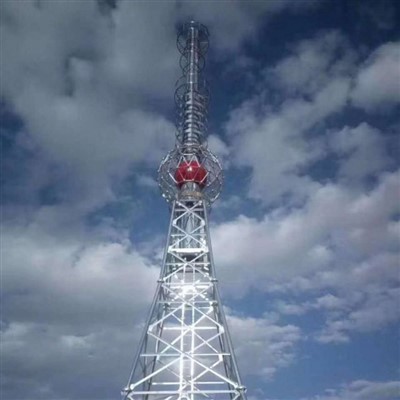
The type of tower structure is another important consideration. There are several different types of communication towers, including lattice towers, monopole towers, and guyed towers. Each type of tower has its own advantages and disadvantages in terms of wind resistance. Lattice towers, for example, are typically more resistant to wind forces than monopole towers because they have a more open structure that allows the wind to pass through. Guyed towers, on the other hand, are supported by cables that help to stabilize the tower and reduce the wind forces acting on it.
The materials used in the construction of the tower also play a crucial role in its wind resistance. Steel is a commonly used material for communication towers because it is strong, durable, and relatively lightweight. However, the type of steel used and the way it is fabricated can have a significant impact on the tower’s performance in high winds. For example, high-strength steel can be used to reduce the weight of the tower without sacrificing its strength, while proper welding techniques can ensure that the tower is structurally sound.
Engineering Strategies
In addition to design considerations, engineers also use a variety of engineering strategies to enhance the wind resistance of communication towers. These strategies include aerodynamic design, structural reinforcement, and damping systems.
Aerodynamic design involves shaping the tower in a way that reduces the drag and lift forces acting on it. This can be achieved by using streamlined shapes, such as tapered or curved profiles, and by minimizing the surface area of the tower. For example, some communication towers are designed with a triangular cross-section, which helps to reduce the drag force and improve the tower’s stability in high winds.
Structural reinforcement involves adding additional support to the tower to increase its strength and stiffness. This can be done by using additional steel members, such as braces or struts, or by increasing the thickness of the tower’s walls. In some cases, the tower may also be designed with a redundant structure, which means that it has multiple load paths that can distribute the wind forces evenly.
Damping systems are used to reduce the vibrations caused by wind-induced vortex shedding. These systems work by dissipating the energy of the vibrations, which helps to prevent the tower from experiencing fatigue and damage over time. There are several different types of damping systems, including tuned mass dampers, viscous dampers, and friction dampers. Each type of damping system has its own advantages and disadvantages, and the choice of system depends on the specific requirements of the tower.
Maintenance and Inspection
Once a communication tower is installed, it is important to perform regular maintenance and inspection to ensure that it remains in good condition and can continue to withstand strong winds. Maintenance tasks may include checking the tower for signs of damage or corrosion, tightening bolts and connections, and replacing any worn or damaged components. Inspection tasks may include visual inspections, non-destructive testing, and structural analysis.
Regular maintenance and inspection can help to identify potential problems before they become serious, which can save time and money in the long run. It can also help to ensure that the tower continues to operate safely and reliably, which is essential for maintaining seamless connectivity.
Conclusion
In conclusion, communication towers are designed to withstand strong winds through a combination of scientific principles, engineering strategies, and regular maintenance and inspection. By understanding the nature of wind forces and taking into account the various design considerations, engineers can ensure that communication towers are able to stand firm against the elements and provide reliable connectivity in all weather conditions.
Power Transmission Towers If you’re in the market for a communication tower, I encourage you to contact us to discuss your specific requirements. Our team of experts can help you choose the right tower for your needs and ensure that it is installed and maintained to the highest standards. We’re committed to providing our customers with the best possible products and services, and we look forward to working with you.
References
- Simiu, E., & Scanlan, R. H. (1996). Wind effects on structures: Fundamentals and applications to design. Wiley.
- Holmes, J. D. (2007). Wind loading of structures. Spon Press.
- ASCE 7-16. (2016). Minimum design loads and associated criteria for buildings and other structures. American Society of Civil Engineers.
Hebei Yifeng Steel Structure Co., Ltd.
As one of the most professional communication towers manufacturers and suppliers in China, we offer a wide range of products with superior quality. Please feel free to buy cost-efficient communication towers for sale here from our factory. Contact us for more details.
Address: Guangchuan Town Industrial Zone, Jing County, Hengshui City, Hebei Province
E-mail: hbyfgjg@163.com
WebSite: https://www.yf-powertowers.com/
