If you’ve ever walked past a construction site, stared down a rust-free steel support beam, or held a small carbon steel bolt that didn’t snap when you dropped it, you’ve interacted with a product that started life as a plain, squarish block of metal. As a carbon steel bar supplier who’s stood right next to our rolling mill during every step of that transformation, I’m here to walk you through the rolling process—no stuffy textbook jargon, just the real, messy, precise work that turns raw steel into the bar you’re going to specify for your next project. Carbon Steel Bar

Let’s start before the rolling even begins. I’ve got a scar on my left hand from a time I didn’t double-check the input, so trust me on this: the first step is quality control of the raw material. Our supplier delivers carbon steel billets—think 40-foot-long, solid square blocks, usually 6×6 inches or 8×8 inches, made from molten iron mixed with controlled amounts of carbon (usually 0.05 to 2.0% by weight, per industry standards) and tiny traces of manganese, sulfur, phosphorus, and other elements. We test every billet right when it arrives: spark it to check carbon content (different alloys spark different colors, a trick our old mill operator taught me before I could read a spectrometer), check for surface cracks with a non-destructive ultrasonic tester, and weigh each one to make sure it matches our batch specs. No billet leaves our yard if it has a hidden flaw—we’ve had to reject a whole shipment once when a steel mill accidentally added too much sulfur, which would have made our bars brittle, and that’s a mistake I never want to repeat.
Once the billets pass inspection, they head to the reheating furnace. This is a massive, gas-fired chamber that’s like a giant oven the length of a football field. We load the billets in batches, pushing them along rollers that slowly move them through the furnace at a controlled pace. The goal here is to heat the billet evenly to around 1,200 degrees Celsius—hot enough to make the steel soft and malleable, but not so hot that it develops a grainy, weak surface. I once worked a shift where a furnace’s temperature sensor malfunctioned, and we had to yank the first dozen billets out before they overheated; their edges were soft and mushy, and we couldn’t roll them into usable bars. Reheating is all about consistency—too cold, and the steel will crack when we squeeze it; too hot, and it loses its structural integrity. That’s why we have three temperature checks per billet, every 10 minutes, from the time it goes in to the time it comes out.
Now we get to the heart of the process: hot rolling. This is where the billet stops being a square block and starts becoming a long, thin bar. Hot rolling works because when steel is hot, it’s ductile—you can squeeze it without it shattering like glass. We start with a series of roughing mills: sets of heavy, grooved rollers that spin at super fast speeds, slowly narrowing the billet as it passes through each pair. Every roller has a different-shaped groove—first a square, then a rectangular, then an oval, then a round—so that with each pass, we reshape the metal gradually, not all at once. If we tried to squeeze a 6×6 billet down to a 1-inch bar in one pass, the steel would tear, the mill would stall, and we’d have hours of downtime fixing it. I’ve seen a rookie operator adjust the rollers wrong on their first week, and the billet bent into a U-shape mid-pass, like a wet noodle—we had to cut it up and scrap it, a $2,000 mistake.
After the roughing mills, the bar goes to the finishing mills, which take the slightly smaller, more uniform bar and push it through even more precise, closely spaced rollers. These mills are calibrated within a thousandth of an inch—literally. We use laser guides to make sure the bar stays centered, so it doesn’t come out lopsided. The speed here is incredible: by the time the bar leaves the finishing mills, it’s moving at over 30 miles per hour, and it’s already close to its final diameter. For example, if we’re rolling a 1/2-inch diameter carbon steel bar, it’ll go from a 2-inch roughing mill output to a 9/16-inch bar in the finishing mills, just a tiny bit away from its final size. I always think of this part as the bar’s “teenage years”—it’s almost done, but still needs a little fine-tuning to get to its full, correct shape.
Next is the most important step for the bar’s long-term performance: cooling and inspection. When the bar leaves the finishing mills, it’s still red-hot, around 800 degrees Celsius. We lay it out on a cooled, vibrating table—called a cooling bed—where it cools slowly and evenly. If it cools too fast, the surface hardens while the inside is still hot, which causes internal stresses that make the bar warp or crack later. If it cools too slow, the grain structure gets too big, making it weaker. We time exactly how long it takes to move from one end of the cooling bed to the other, and we control the air flow around the bars to get that speed just right. Once they’re cool enough to touch (about 50 degrees Celsius), we cut them into standard lengths—usually 20 or 40 feet—using a high-powered saw or shear.
Right after cutting, we do a final, rigorous quality check. We measure every bar’s diameter with calipers to make sure it’s within the tolerance we promised (most of our bars are within 0.005 inches of the specified size, which is way tighter than industry minimums). We check the surface for any scratches, dents, or cracks with a visual inspection—our team has developed an eye for spotting flaws that even machines miss, like a tiny linear mark that could turn into a break under pressure. We also run a sample from every batch through a tensile tester, pulling it until it breaks, to make sure it meets our strength specs—most of our carbon steel bars have a yield strength of at least 30,000 psi, and many go higher for structural applications. I still remember our first big order for a bridge project; we tested a sample, and it hit 42,000 psi, which was 20% over the required standard, and that’s when I knew our process worked.
Wait, what about cold rolling? I get asked about that all the time. Cold rolling is for when you need an even smoother, more precise bar—like for fasteners or precision machining parts. It’s a separate process where you take hot rolled bar and roll it at room temperature, which makes it harder and stronger, and gives it a mirror-like surface finish. But for most construction, manufacturing, and general engineering uses, hot rolling is what we offer, and it’s more than enough strength and durability. I always tell customers: don’t pay extra for cold rolling unless you really need it—hot rolled carbon steel bar is workhorse material that’s stood the test of time for everything from rebar in concrete to axles for farm equipment.
Another thing I wish people understood: rolling is a physical process, not magic. Every time that billet goes through a roller, it’s deforming metal on a molecular level, stretching the grains in a way that makes the bar stronger along its length, not weaker. That’s why a carbon steel bar is so good at holding heavy loads—its grain structure aligns with the direction it’s rolled, which makes it far more durable than a cast steel bar, which is just poured into a mold and can have air bubbles or weak spots.
Now, I won’t lie: there are challenges to this process. Mill downtime is our biggest enemy. Every few months, the rollers need to be resurfaced or replaced, and that takes a full day of work. Even a small power glitch can throw the whole line off, ruining an entire batch. That’s why our team works 12-hour shifts, rotating, to keep things running smoothly—because a delayed order isn’t just a hassle for us, it’s a problem for our customers. Last year, a snowstorm knocked out power for 6 hours, and our team came in on a Sunday to reheat the billets we’d already loaded, because we had a construction deadline to meet. That’s the kind of work that doesn’t show up in textbooks, but it’s what makes the process reliable.
If you’re in the market for carbon steel bar, whether it’s for construction, automotive parts, manufacturing, or any other project, you want to know that the bar you’re getting is consistent, strong, and made to spec. The rolling process isn’t just a series of machines turning metal—it’s a balance of heat, pressure, time, and human expertise. Every step, from testing the raw billets to checking the final bar, is designed to make sure you get a product that works when you need it, no surprises.
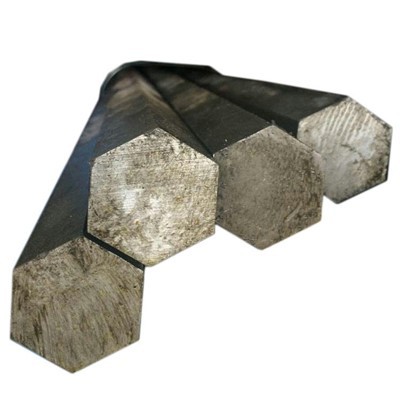
Whether you’re a contractor needing rebar for a new building, a machinist needing bar for custom parts, or a project manager sourcing metal for a large infrastructure job, our team has years of experience rolling carbon steel bar that meets your exact needs. We work closely with every customer to adjust our rolling parameters if you need a specific strength level, diameter, or surface finish. To get a custom quote, learn more about our different carbon steel grades, or ask questions about how the rolling process works for your specific project, reach out to our team to start a conversation. We’re happy to walk you through every step of what goes into the bar you’ll be using for your next build.
Stainless Steel Bar References
- Metals Handbook, Volume 4: Heat Treating; American Society for Metals, 2005
- Steel Rolling Technology: Principles, Process Design, and Simulation; CRC Press, 2018
- ASTM A36 / A36M – Standard Specification for Carbon Structural Steel; ASTM International, 2022
- Manufacturing Processes for Engineering Materials; Kalpakjian, S. and Schmid, S.R.; Pearson, 2020
Shanxi Midas Industrial Co., Ltd.
We’re known as one of the most professional carbon steel bar manufacturers and suppliers in China. With abundant experience, we warmly welcome you to buy cheap carbon steel bar made in China here from our factory. For price consultation, contact us.
Address: 28th, Huanqiu Jinrong Zhongxin, Xieyuan Road, Changfeng Business District, Taiyuan City, Shanxi Province, China
E-mail: midassteel@163.com
WebSite: https://www.midassteel.com/
