Hey everyone, if you’ve ever looked into buying a continuous pyrolysis plant—whether you’re recycling waste plastic, rubber, or even agricultural sludge—you’ve probably wondered one big thing before pulling the trigger: “How much energy does this actually use?” As someone who’s been supplying these plants for 12 years, I talk about energy consumption more than any other spec. Most folks get fixated on throughput or how much end product they’ll get, but skip the part that’ll kill their profit margin if they get it wrong. So let’s break this down like I do when I’m walking a new client through a quote—no jargon, just real numbers and what they actually mean for your bottom line. Continuous Pyrolysis Plant

First, let’s get one myth out fast: continuous pyrolysis isn’t the energy hog you might think compared to batch systems. Batch plants are constantly heating and cooling, wasting tons of energy every time they load a new batch. Continuous plants (the ones we sell) run nonstop, with a steady feed of waste going in and a steady stream of oil, carbon black, and steel wire (if you’re processing tires) coming out. That consistent operation is where the energy savings live, but it’s not zero—so let’s get to the numbers.
First, the main power draw for any continuous pyrolysis plant is three things: the reactor’s heating system, the feed system that pushes waste into the reactor, and the gas treatment and condensation unit that turns the reactor off-gas into usable oil. For a mid-sized plant that processes 5 tons of waste per day (that’s the sweet spot for most small-to-medium recycling businesses I work with), total energy consumption lands between 1,200 kWh to 1,800 kWh per day. Wait, that might sound high, but let’s context: a single industrial dryer at a recycling facility uses 800 kWh just for one load. But here’s the kicker—most of that energy isn’t coming from your grid. The reactor’s heat? 70% of it is self-generated from the syngas produced during pyrolysis. Syngas is the mix of flammable gases (methane, propane, hydrogen) that comes off the waste when it heats up. We capture that, clean it a little, and use it to fire the reactor instead of buying natural gas or electricity. That cuts your external energy needs way down—usually to 300 kWh to 500 kWh per day for that 5-ton plant, mostly for the feed system, condenser fans, and control panels.
But let’s not generalize too much. Energy use depends on what you’re processing, right? If you’re running waste plastic (polyethylene or polypropylene), it’s a bit different than scrap tires or agricultural waste. Plastic has higher heat content, so the reactor needs less external heat, so total energy drops to around 1,000 kWh to 1,500 kWh per day. Scrap tires, on the other hand, have steel wire and fiber that need more processing after pyrolysis, so your feed system uses a tiny bit more power, pushing numbers up to 1,500 kWh to 2,000 kWh per day. Agricultural waste, like corn stalks or rice husks, is lower in heat content, so you’ll need a little extra syngas or a small backup burner, but even then, external grid power only adds up to 400 kWh max per day.
Wait, let’s talk about peak load and downtime, because that’s a big mistake I see new clients make. If your plant isn’t running full capacity (say, you only feed 3 tons a day instead of 5), energy efficiency plummets. You’re still running the same fans, pumps, and burners, but there’s less waste to heat, so you’re wasting energy on empty reactor space. That’s why we design our plants with adjustable feed rates—you can dial it up or down based on your waste supply, so you don’t burn energy for nothing. Also, continuous plants don’t have the heat loss that batch plants do. A batch plant has to cool the reactor every time it finishes a run, wasting all the heat built up. Our continuous plants run at a constant 450-500°C (the sweet spot for pyrolysis), so we’re retaining almost all the heat we generate. That’s why our clients typically see a 25-30% lower energy bill than if they’d bought a batch plant of the same throughput.
Another thing: don’t forget auxiliary equipment. Most suppliers will quote you the reactor alone, but the feed hopper, screw conveyor, gas scrubber, and oil storage tank add up. For our 5-ton plant, those auxiliaries add 200-300 kWh to your daily use. Cheap plants from overseas often skip insulation on the reactor or use small, inefficient fans, so their total energy use can be 50% higher than what we quote. I had a client last year who bought a knockoff plant from a guy on Alibaba (yeah, I see those too) and ended up using 2,200 kWh a day for a 5-ton plant—his electric bill was $1,200 a month, while a similar client with our plant pays $500. That’s the difference between making a profit and breaking even.
Now, let’s talk about how to calculate this for your own operation. Take your daily waste input, multiply by your local electricity rate (let’s say $0.12 per kWh in the US, for example), and that’s your grid energy cost. Then subtract the value of the syngas you use. A 5-ton plant produces about 1 ton of syngas per day, which is worth around $50-70 in most markets if you didn’t use it yourself. So let’s do the math: 500 kWh external power x $0.12 = $60 a day, minus $50 in syngas value, so your net energy cost is $10 a day. That’s nuts, right? Most people think they’ll be spending $300+ a month on energy, but that’s only if you’re not using the syngas. Our plants come standard with a closed-loop syngas system, so you don’t have to vent it into the atmosphere (which is not only a waste of energy but actually illegal in some places now) and you don’t have to buy extra fuel.
Wait, what about larger plants? A 10-ton per day plant, which is for bigger recycling operations, uses between 2,200 kWh and 3,000 kWh total, with external grid use around 600-800 kWh. That’s still way less than you’d expect, and the syngas covers most of the rest. And for really small plants, 2 tons per day, it’s around 600-900 kWh total, with 150-250 kWh from the grid. I recently sold a 2-ton plant to a guy in India who processes waste plastic from local markets—his energy cost is around $15 a month, not a day. That’s the power of a well-designed continuous system vs. a cheap batch setup.
But let’s be real, it’s not all perfect. If you’re in a place with super high electricity rates, like Germany or parts of Japan, even the grid portion can add up a bit. But even then, our clients often offset that by selling excess syngas back to the local power grid—wait, yeah, some places let you do that! If you produce more syngas than you can use, you can pipe it to a local industrial user or sell it to the grid, which cuts your energy costs even more. I had a client in Germany last year who started selling 50% of his syngas to a nearby bakery, so he actually makes $300 a month from energy, not spends it. That’s the kind of thing no one tells you when you’re first looking.
Now, common mistakes clients make that mess up their energy numbers. First, assuming all continuous plants are the same. Some suppliers will cut corners on insulation—if your reactor isn’t insulated, you’re losing 20% of your heat to the air, so you need more fuel, more power, higher energy use. Our plants have 100mm of rockwool insulation around the reactor, which is the standard for high-efficiency pyrolysis. Another mistake: not accounting for waste moisture. If your waste is 10% water (like wet grass or old food packaging), you have to dry it before feeding it into the reactor, which adds 100-200 kWh a day. That’s why we include a small dryer with our plants—most cheap suppliers leave that out, so you have to buy it separately, and it adds more energy use.
Wait, let’s talk about long-term energy consumption too. Our plants are built with stainless steel reactors and heavy-duty components, so they last 10+ years with minimal maintenance. A plant that uses less energy to run will save you thousands over its lifespan. Let’s say you save $1,000 a month on energy with our plant vs. a cheaper one—that’s $12,000 a year, $120,000 over 10 years. That’s almost enough to buy a new small pickup for your operation. I can’t tell you how many clients have come back and said the energy savings alone made their investment pay off in 18 months instead of 3 years.
So, to wrap this up: energy consumption for a continuous pyrolysis plant isn’t a one-size-fits-all number, but it’s way more manageable than most people think, especially when you account for self-generated syngas. The key numbers to remember are: 5-ton daily plant = 1,200-1,800 kWh total, with 300-500 kWh from the grid; larger plants scale similarly. The biggest factors are what you’re processing, how well the plant is built, and whether you’re using the syngas instead of buying extra fuel.
If you’re shopping around for a continuous pyrolysis plant, don’t just ask for a “low energy” spec—ask for the daily kWh, break down how much is grid vs. self-generated, and what the total cost will be per month. I’ve been doing this long enough to spot the red flags: any supplier that can’t give you a detailed energy breakdown is probably cutting corners on insulation or auxiliary equipment, which will cost you more in the long run.
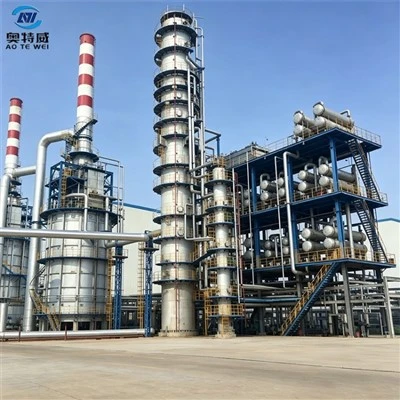
Ready to talk through your specific waste type, throughput, and energy goals? Hit me up, and we can walk through a custom quote that includes exact energy numbers for your operation. No sales pitch, just real numbers based on what I’ve seen work for other clients.
Refining Plant References:
- "Pyrolysis of Waste Plastics: Energy Efficiency and Process Optimization", Journal of Waste Management, 2021
- "Continuous vs Batch Pyrolysis: Energy Consumption and Economic Viability", International Journal of Sustainable Production and Consumption, 2022
- "Syngas Utilization in Pyrolysis Plants: Best Practices for Energy Self-Sufficiency", Industrial Energy Efficiency Review, 2023
Shangqiu Aotewei Environmental Protection Equipment Co., Ltd.
Shangqiu Aotewei Environmental Protection Equipment Co., Ltd. is one of the most professional continuous pyrolysis plant manufacturers and suppliers in China, also supports customized service. Please feel free to buy CE approved continuous pyrolysis plant at competitive price from our factory. Welcome to contact us for pricelist.
Address: No.88 Longhai Road, Liangyuan District, Shangqiu City, Henan Province, China
E-mail: colin@henanpower.com.cn
WebSite: https://www.aoteweitech.com/
