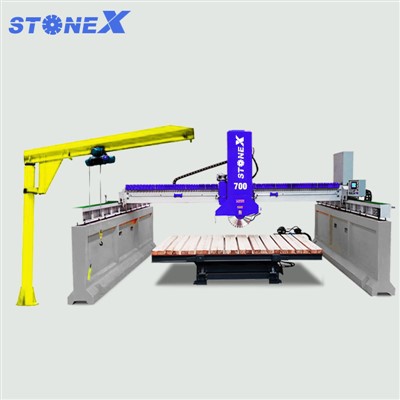
Hey there! I’m a supplier of Bridge Saws, and I know how crucial it is to boost the cutting efficiency of these machines. In the stone – processing industry, time is money, and any improvement in cutting efficiency means more profit and a competitive edge. So, let’s dive into some practical ways to make your Bridge Saw work better and faster. Bridge Saw
1. Choose the Right Blade
The blade is like the heart of a Bridge Saw. Picking the correct one can make a huge difference in cutting efficiency. First off, you gotta consider the type of material you’re cutting. If you’re working with granite, a blade with diamonds specially designed for tough, abrasive materials is a must. Marble, on the other hand, is a bit softer, so you can use a different kind of diamond blade that’s more suitable for its composition.
Also, the blade’s diameter matters. A larger – diameter blade can cut through thicker materials in one pass, reducing the time spent on multiple cuts. But keep in mind that larger blades also need more power to operate efficiently. So, you need to make sure your Bridge Saw can handle it. And don’t forget about the blade’s speed. Every blade has an optimal speed range. Running it too fast or too slow can not only reduce cutting efficiency but also wear out the blade quicker.
2. Optimize the Cutting Parameters
Another key factor is getting the cutting parameters right. The feed rate, which is how fast the saw moves across the material, needs to be adjusted according to the material’s hardness and the blade’s capabilities. If you set the feed rate too high, the blade might struggle to cut through the material properly, leading to a rough cut and potentially damaging the blade. On the flip side, if the feed rate is too low, you’re wasting time.
The cutting depth is also important. You can’t just go for a deep cut all at once. It’s better to make multiple passes with a shallower cutting depth. This helps the blade cut more smoothly and reduces the stress on the saw. It might seem like more work, but in the long run, it saves time by preventing blade breakage and reducing the need for re – cuts.
3. Keep Your Saw Well – Maintained
A well – maintained Bridge Saw is like a well – oiled machine; it runs smoothly and efficiently. Regular cleaning is a must. After each use, make sure to remove any dust and debris from the saw. Buildup of dust can clog the moving parts, reduce the saw’s performance, and even cause overheating.
Lubrication is another crucial aspect. All the movable parts, like the rails and the gearbox, need to be lubricated regularly. This reduces friction, which in turn makes the saw run more efficiently and extends its lifespan.
You should also check the alignment of the saw regularly. If the blade is not properly aligned, it won’t cut straight, which can lead to uneven cuts and wasted materials. And don’t forget about the hydraulic system. If you have a hydraulic – powered Bridge Saw, check the fluid levels and make sure there are no leaks.
4. Train Your Operators
No matter how good your Bridge Saw and all its components are, if your operators don’t know how to use it properly, you’re not going to get the best results. Training your operators thoroughly is essential. They need to understand how the saw works, how to adjust the cutting parameters, and how to perform basic maintenance.
A well – trained operator can quickly identify and solve minor problems, which can prevent major breakdowns and keep the cutting process running smoothly. You can provide on – the – job training or even send your operators to specialized training courses. This investment in training will pay off in the form of increased cutting efficiency and less downtime.
5. Use Advanced Software and Automation
In today’s digital age, technology can be a game – changer. Many modern Bridge Saws come with advanced software that can optimize the cutting process. This software can calculate the best cutting path based on the shape and size of the material you’re working with, reducing waste and saving time.
Automation can also play a big role. Automated loading and unloading systems can speed up the process significantly. Instead of manual labor, which is slow and prone to errors, these systems can move materials in and out of the cutting area quickly and accurately. Some Bridge Saws even have automated blade changing systems. This means that when one blade is worn out, the saw can automatically switch to a new one, without any downtime.
6. Monitor and Analyze Performance
To continuously improve the cutting efficiency of your Bridge Saw, you need to monitor its performance regularly. Keep track of things like the cutting time for each job, the amount of material wasted, and the frequency of blade changes. By analyzing this data, you can identify areas where there’s room for improvement.
For example, if you notice that the cutting time is increasing for certain types of materials, it could be a sign that the blade needs to be replaced or that the cutting parameters need to be adjusted. You can use simple spreadsheets or more advanced monitoring software to collect and analyze this data.
7. Upgrade Your Saw
If your Bridge Saw is an older model, it might be time to consider an upgrade. Newer models often come with improved designs, better – performing components, and more advanced features. For example, some new Bridge Saws have more powerful motors, which can handle larger – diameter blades and cut through tougher materials more efficiently.
Upgrading can also mean adding new accessories. For instance, a new dust collection system can improve the working environment while also preventing dust from affecting the saw’s performance. And a new control panel with a more user – friendly interface can make it easier for operators to adjust the saw’s settings.
Closing Thoughts
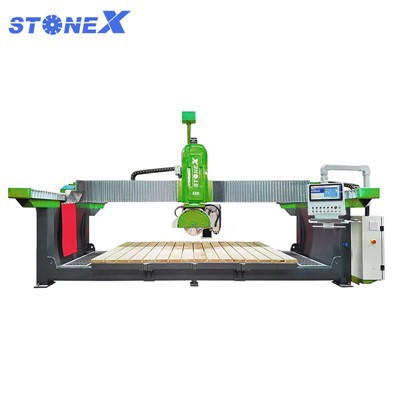
Improving the cutting efficiency of a Bridge Saw is a multi – faceted process. It involves choosing the right blade, optimizing cutting parameters, regular maintenance, operator training, using technology, performance monitoring, and sometimes even upgrading your saw. By implementing these strategies, you can get more work done in less time, reduce waste, and ultimately increase your bottom line.
Block Cutting Machine If you’re looking to improve the cutting efficiency of your Bridge Saw, or if you’re in the market for a new one, don’t hesitate to reach out. We’re here to help you find the best solutions for your stone – processing needs.
References
- Stone Industry Handbook: A comprehensive guide to stone processing equipment and techniques.
- Bridge Saw Manufacturer’s Manuals: Contain detailed information on the operation, maintenance, and optimization of Bridge Saws.
- Industry Magazines: Articles on the latest trends and best practices in the stone – cutting industry.
Nantong Huayi Intelligent Equipment Co., Ltd.
As one of the most professional bridge saw manufacturers and suppliers in China, we offer a wide range of products with superior quality. Please feel free to buy high quality bridge saw at competitive price from our factory. Contact us for quotation.
Address: Dongsheng Stone Industry Park, Changjiang Town, Rugao City, Jiangsu Province, China
E-mail: claire@hualongm.com
WebSite: https://www.hystonemachinery.com/
