If you’ve been in the casting part machining game for more than five minutes, you know it’s a space that moves at two speeds: slow and steady… until it’s not. For years, we’ve relied on processes that feel like old friends—milling fixtures that have been tweaked a hundred times, tooling that we trust, quality checks that have never failed us. But that comfort can become a trap, especially when competitors start pulling ahead with tighter tolerances, faster lead times, and parts that don’t cost an arm and a mint to machine. When I walked into our shop five years ago, we were machining the same aluminum engine blocks for a local tractor manufacturer the same way we had since 2008. We were holding our own, sure, but I could feel the shift in the wind: our clients were asking for parts with ±0.001” tolerances, and our lead times were 20% longer than the three shops that kept outbidding us. So we made the call to introduce new machining technologies into our casting part operations—and it didn’t go perfectly the first time. We burned through $12,000 on a new 5-axis mill that sat idle for three months because we didn’t train our team, skipped a trial run with a test casting, and tried to cram it into our existing workflow like a square peg in a round hole. That mistake taught us more than any training manual ever could: introducing new tech in casting machining isn’t about buying the flashiest machine—it’s about weaving it into your operation in a way that works for your people, your parts, and your clients. Now, after three years of refining that process, we’ve cut our cycle times by 25%, our scrap rate is down 18%, and we still have that old mill we used to use for backup. Here’s what I’ve learned, the hard way, about doing this right. Casting Part Machining
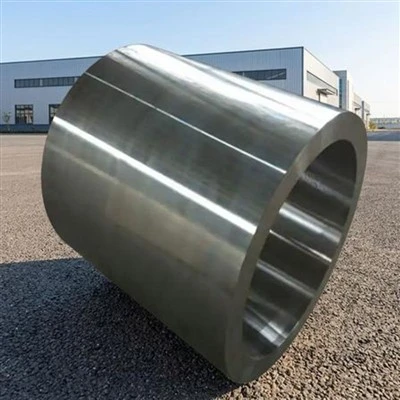
First, you have to stop thinking about new tech as a “upgrade” and start thinking about it as a solution to specific, tangible problems. Back when I first started pushing for new equipment, I wanted a 5-axis mill because it was the coolest machine I’d ever seen at a trade show. But when I sat down with our foreman, Joe, who’d been machining castings for 32 years, he told me something that stuck: “Cool machines don’t fix slow lead times. This line of aluminum valve covers takes two setups with our current mills—what if a machine could do it in one?” That question changed everything. Instead of chasing flash, we started auditing our operations for pain points we could actually measure. We spent two weeks walking the shop floor with a clipboard, marking every part that required multiple setups, every casting that came off the line with a porosity issue that made it fail post-machining, and every client complaint related to lead times. The data didn’t lie: 60% of our valve cover jobs needed two setups, adding 45 minutes to each cycle. 30% of our ductile iron brake calipers were being scrapped because of surface finish inconsistencies that came from using outdated tooling. Our client, that tractor manufacturer, needed a new transmission housing that would have required three setups on our current equipment—and they were willing to pay a 10% premium if we could do it in one. So we didn’t buy a random 5-axis mill. We bought a model that specialized in complex, single-setup operations for aluminum castings—exactly the part we were already struggling with. That’s the first rule: new tech should solve a specific problem, not just make your shop look modern. Skip this, and you’ll end up with a $50,000 paperweight in the corner.
Next, you have to bring your team along before you turn on the machine. Joe, our foreman, was skeptical of that 5-axis mill at first. He’d spent decades mastering the tricks of manual setup, and new code felt like black magic to him. When we brought in a trainer for the first time, I made a mistake: I made Joe attend a two-day class on G-code while our night shift ran the old mill. By day two, Joe was ready to quit—he kept saying, “I don’t need to learn code. I know how to set a mill right.” That’s when we changed our approach. Instead of training the whole team at once, we paired Joe with the trainer for four hours a day, after his regular shift, working on a test part: a valve cover, the same one we’d been machining for years. We didn’t throw code at him right away. We let him run the mill manually on the test part first, then the trainer showed him how the code could mirror the steps he was already taking, just faster and more consistently. By the end of the month, Joe was the one teaching the other machinists how to use the 5-axis mill. That’s the key: the people who actually run the machines every day need to see how the new tech makes their jobs easier, not harder. If you skip that step, you’ll have a team that sabotages the new process because they feel like it’s taking control away, or they don’t trust it to do the work as well as they can. Another thing we did: we kept our old, reliable machines running alongside the new ones. If a machinist felt overwhelmed, they could go back to the old mill for a week while they got comfortable with the new one. That safety net made all the difference. No one felt like they were being forced to replace a skill they’d built their career on—they felt like they were adding a new tool to their toolbox.
Then, you have to test, test, and test again—on your terms. I’ve seen other shops buy new equipment, plug it in, and run production parts straight away, only to find out that the machine can’t handle the specific quirks of the castings they machine. Castings, by nature, are messy. A sand casting for a hydraulic pump might have a slight porosity spot here, a thin wall there, a draft angle that’s off by a fraction of a degree from the blueprint. Generic test parts don’t catch that—you need to test with your actual castings, the ones you run every day. When we got our 5-axis mill, we didn’t run the tractor manufacturer’s transmission housing right away. We asked them for 20 test castings, and we spent three weeks machining them, stopping every 10 parts to check for tool wear, surface finish, dimensional accuracy, and even chip formation (something no training manual warned us about—long, stringy chips from aluminum can wrap around tooling and wreck a part if you don’t adjust the machine’s speeds). We also tested different cutting parameters—slower speeds for ductile iron, faster for aluminum—until we found what worked for our specific castings, not what the machine’s manufacturer said would work. We even brought in our quality team early, not just at the end of the process, to make sure the new machine was holding the ±0.001” tolerance the client needed, and that it wasn’t missing any porosity spots that would cause field failures. That trial run also let us work out kinks in our workflow. We used to have a team member load parts and unload them one at a time, but with the 5-axis mill’s automatic pallet changer, we realized we could load parts on one pallet while the machine was running another, cutting down on idle time. That adjustment alone saved us 30 minutes per job.
Another critical step: integrate quality checks into the new tech, don’t treat quality as an afterthought. When we were running parts on our old mills, we’d do a random check of 10% of the parts at the end of the shift. With our new 5-axis mill, we added in-process checks that the machine does automatically. It uses a probe to touch the casting before machining, checking for any dimensional variation from the blueprint, and adjusts the tool path if the casting is slightly out of spec. It also checks critical features—like the bolt holes on that transmission housing—mid-process, so if a tool has worn down, it doesn’t ruin the whole part. That cut our scrap rate on that job from 8% to less than 1%, and it saved us a ton of rework time. But we also kept our manual quality checks, because even the best machine can have a glitch. Once, a tool wear sensor failed and the machine kept running, and we caught it during our final check before the part went out the door. That balance of automated checks and human oversight is key for casting machining, because castings will always have unique quirks that a machine can only catch if you train it right—and sometimes, it still needs a second set of eyes.
And here’s something that a lot of new shops don’t talk about: when you introduce new machining tech, you also have to update your workflows and your client agreements. Our old workflow had a job that went: customer orders → machinist sets up mill → runs parts → quality check → ships. With the new 5-axis mill, we could run parts faster, but the pallet changer meant we had to adjust how we scheduled jobs. We started grouping similar jobs together to minimize changeover time, and we set new lead time expectations with our clients. The tractor manufacturer, for example, used to get their transmission housings in three weeks, but with the new mill, we could deliver them in 10 days—so we told them, and adjusted our invoicing to reflect that faster turnaround. We also updated our quotes to include the new capabilities. Before, when a client asked for a complex part, we’d quote the job with multiple setups and a higher price. Now, we can offer single-setup jobs at a lower price, because the new tech cuts down on labor time. That’s how we turned that new investment into a selling point, not just an expense. Our client base grew by 20% in the two years after we brought in the 5-axis mill, mostly because we could offer parts that competitors either couldn’t machine or could only machine at a higher price.
Now, two years in, we’re adding another new tech: a robotic tool changer for our lathes, to handle smaller, high-volume castings like hydraulic valve bodies. But we’re not making the same mistakes we made back in 2018. We’re pairing the machinists with a trainer for four hours a day, testing with our actual castings before production, and adjusting our workflow before we turn on the machine. The biggest lesson I’ve learned through all of this is that new machining tech isn’t about replacing the hard-earned knowledge of your team. It’s about giving that team the tools to do their jobs better, faster, and more accurately. Casting part machining is a hands-on trade—you can’t run a shop on code and machines alone. You need people who know their parts, their tools, and their clients inside and out. The tech is just there to make their work easier. If you go into it with that mindset, instead of trying to “update” your shop for the sake of looking modern, you’ll avoid the missteps we made and build a process that actually works for your business.
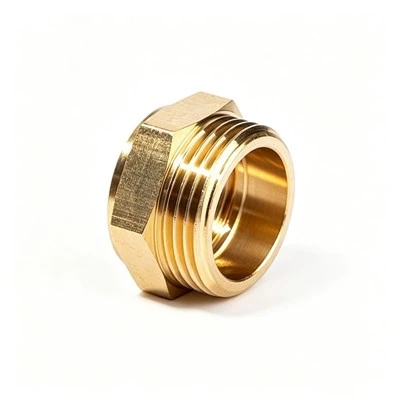
At our shop, we’ve always believed that trust is the foundation of every part we machine. We don’t cut corners on quality, we don’t miss lead times, and we work with our clients to solve their toughest machining challenges. If you’re a procurement manager or engineering lead looking for a casting part machining partner that combines old-world expertise with modern technology—someone who will listen to your needs, test every part before it ships, and deliver parts that meet your exact specifications—we’re here to talk. Our team has decades of experience machining all types of castings, from aluminum to ductile iron to steel, and we’re always looking for ways to improve our processes to help our clients succeed.
Casting Part Machining References
- American Foundry Society. (2020). Modern Machining Techniques for Cast Parts: A Practical Guide. AFS Press.
- DeGarmo, E. P., Black, J. T., & Kohser, R. A. (2019). Materials and Processes in Manufacturing (13th ed.). Wiley.
- Groover, M. P. (2021). Fundamentals of Modern Manufacturing: Materials, Processes, and Systems (8th ed.). Wiley.
- ISO 9001:2015. (2015). Quality management systems — Requirements. International Organization for Standardization.
- Smith, G. (2022). Integrating Automation and CNC Machining for Cast Part Production. Industrial Press Inc.
Ningbo Yirui Machinery Manufacturing Co., Ltd.
As one of the most professional casting part machining manufacturers and suppliers in China, we’re featured by quality products and good price. Please rest assured to wholesale durable casting part machining made in China here from our factory. Customized orders are welcome.
Address: No.107, Wanzhong Village, Jishigang Town, Haishu District, Ningbo City
E-mail: James.he@yiruitek.com
WebSite: https://www.yiruime.com/
