As a seasoned supplier of angle steel towers, I’ve witnessed firsthand the significance of adhering to strict standards in their construction. Angle steel towers are integral components in various industries, including telecommunications, power transmission, and broadcasting. Their reliability and durability are paramount, as they often support critical infrastructure. In this blog, I’ll delve into the key standards that govern angle steel tower construction, ensuring the safety and efficiency of these structures. Angle Steel Tower

Material Quality
The foundation of any high – quality angle steel tower lies in the materials used. The angle steel itself should meet specific chemical and mechanical property requirements. For instance, the carbon content should be within a certain range to ensure the appropriate strength and ductility. High – strength low – alloy (HSLA) steels are commonly used due to their excellent combination of strength, toughness, and weldability.
The steel should be free from defects such as cracks, laminations, and excessive surface roughness. A thorough inspection of the raw materials is essential before fabrication. This includes non – destructive testing methods like ultrasonic testing and magnetic particle inspection to detect any internal or surface flaws.
We source our angle steel from reputable manufacturers who adhere to international standards such as ASTM (American Society for Testing and Materials) or ISO (International Organization for Standardization). These standards ensure that the steel has consistent quality, which is crucial for the long – term performance of the tower.
Design Standards
Design is a critical aspect of angle steel tower construction. The tower must be designed to withstand various environmental loads, including wind, snow, and seismic forces. Engineers use advanced software and mathematical models to analyze these loads and design the tower accordingly.
Wind load is one of the most significant factors. The design wind speed is determined based on the location of the tower, considering historical wind data and local climate conditions. The tower’s shape, height, and cross – sectional area also affect its wind resistance. For example, a lattice – type angle steel tower is designed to minimize wind resistance by allowing the wind to pass through the structure.
Snow load is another important consideration, especially in regions with heavy snowfall. The tower’s members must be designed to support the additional weight of the snow without deformation or failure. Seismic design is crucial in earthquake – prone areas. The tower should be able to withstand seismic forces without collapsing, protecting the infrastructure it supports.
In addition to environmental loads, the tower must also be designed to support the weight of the equipment it carries, such as antennas in a telecommunications tower or transformers in a power transmission tower. The design should ensure that the tower has sufficient strength and stiffness to prevent excessive deflection or vibration.
Fabrication Standards
Fabrication of angle steel towers involves cutting, welding, and assembly processes. Each step must be carried out with precision to ensure the quality of the final product.
Cutting of the angle steel should be done using accurate cutting equipment to ensure the correct dimensions. The cutting edges should be smooth and free from burrs. Welding is a critical process, and the welds must meet specific quality standards. The welders should be certified and follow proper welding procedures. Non – destructive testing of the welds, such as radiographic testing or ultrasonic testing, is often required to ensure the integrity of the welds.
Assembly of the tower components should be carried out in a controlled environment. The components should fit together precisely, and the bolts and nuts should be tightened to the specified torque values. A proper assembly process ensures that the tower has the correct geometry and structural integrity.
Galvanizing and Coating Standards
To protect the angle steel tower from corrosion, galvanizing and coating are essential. Galvanizing is a process of applying a zinc coating to the steel surface. The zinc coating acts as a sacrificial anode, protecting the steel from rusting. The thickness of the zinc coating should meet the relevant standards, typically specified in terms of grams per square meter.
In addition to galvanizing, a top – coat may be applied for additional protection and aesthetic purposes. The coating should have good adhesion, flexibility, and resistance to environmental factors such as UV radiation and chemical exposure. The application of the coating should be carried out in a controlled environment to ensure uniform coverage and thickness.
Installation Standards
Proper installation is crucial for the safe and efficient operation of the angle steel tower. The installation site should be prepared carefully, including leveling the ground and ensuring proper foundation construction. The foundation must be able to support the weight of the tower and the loads it will carry.
During installation, the tower components should be lifted and assembled using appropriate lifting equipment. The installation team should follow the installation manual and safety procedures. The tower should be aligned correctly and secured firmly to the foundation. After installation, a final inspection should be carried out to ensure that the tower meets all the design and construction standards.
Quality Control and Inspection
Throughout the construction process, quality control and inspection are essential. Regular inspections should be carried out at each stage, from material inspection to final installation. Quality control personnel should check the dimensions, material properties, weld quality, and assembly accuracy.
Third – party inspection agencies may also be involved to provide an independent assessment of the tower’s quality. These agencies can conduct comprehensive tests and inspections to ensure that the tower meets all the relevant standards and regulations.
Conclusion
As a supplier of angle steel towers, we understand the importance of adhering to strict standards in construction. From material selection to installation, every step must be carried out with precision and care. By following these standards, we can ensure that our angle steel towers are safe, reliable, and durable.
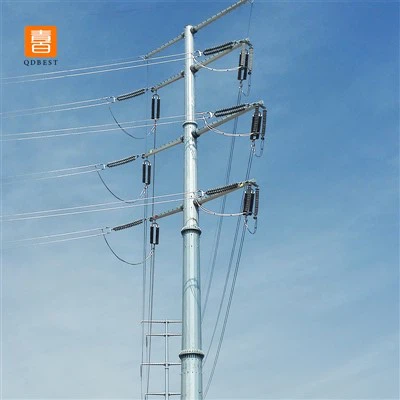
The Monopole Tower If you are in the market for high – quality angle steel towers, we are here to assist you. Our team of experts can provide you with customized solutions based on your specific requirements. We are committed to delivering products that meet the highest standards of quality and performance. Contact us to start a discussion about your angle steel tower needs and explore how we can work together to achieve your goals.
References
- ASTM International. (2023). ASTM Standards for Steel Products.
- ISO. (2023). International Standards for Structural Steel.
- ASCE (American Society of Civil Engineers). (2023). Design Standards for Towers and Similar Structures.
Qingdao BEST Steel Structure Co., Ltd.
Qingdao BEST Steel Structure Co., Ltd. is one of the most professional angle steel tower manufacturers and suppliers in China. We warmly welcome you to buy customized angle steel tower made in China here from our factory. If you have any enquiry about OEM service, please feel free to email us.
Address: Jiaobei Industrial Park, Qingdao, China
E-mail: sales@qdbsstower.com
WebSite: https://www.qdbsstower.com/
