Hey there! As a supplier of Pin Header Female Header Connectors, I often get asked if there are any standards for these little but crucial components. Well, let me break it down for you in an easy – to – understand way. Pin HeaderFemale Header Connector

First off, why do we even need standards for Pin Header Female Header Connectors? You see, these connectors are used in a whole bunch of electronic devices. Whether it’s a simple circuit board in a toy or a high – end motherboard in a gaming PC, they all rely on these connectors to transfer electrical signals from one part to another. Standards ensure that these connectors work smoothly and safely across different devices and manufacturers.
Mechanical Standards
Let’s start with the mechanical aspects. The most basic thing is the pin size and pitch. The pin size refers to the physical dimensions of the pins themselves. It’s super important because if the pins are too big or too small, they won’t fit properly into the corresponding sockets. For example, a common pin diameter is around 0.6mm to 2.0mm.
The pitch, on the other hand, is the distance between the centers of two adjacent pins. Standard pitches are like 2.54mm, 2.00mm, and 1.27mm. Why are these so common? Well, they’ve become industry norms over time. They offer a good balance between space utilization and signal integrity. Imagine you’re designing a small circuit board; you want to pack as many connectors as possible without having the signals on adjacent pins interfering with each other. A smaller pitch like 1.27mm allows for more compact designs, but it also requires more precise manufacturing.
Another mechanical standard is the housing material and design. The housing is what holds the pins in place and provides some protection. It’s usually made of plastic, like polybutylene terephthalate (PBT) or liquid crystal polymer (LCP). These materials are chosen because they’re insulators, which means they won’t conduct electricity and cause short – circuits.
The design of the housing also matters. It should be easy to mount on a circuit board, either through through – hole technology or surface – mount technology. Through – hole connectors have pins that go through holes in the board and are then soldered on the other side. Surface – mount connectors, on the other hand, are soldered directly onto the surface of the board. The housing needs to be designed in a way that makes it compatible with these mounting methods.
Electrical Standards
Now, let’s talk about the electrical side of things. One of the key electrical standards is the current – carrying capacity of the pins. Different applications require different amounts of current to flow through the connectors. For low – power devices like sensors, a connector with a low current – carrying capacity might be sufficient. But for high – power applications like power supplies, you’ll need connectors that can handle a lot more current without overheating.
Typically, the current – carrying capacity is related to the cross – sectional area of the pin. A thicker pin can carry more current. Manufacturers usually specify the maximum current that a particular connector can handle in their datasheets.
Voltage rating is another important electrical standard. Just like current, different applications have different voltage requirements. The connector needs to be able to withstand the voltage without breaking down and causing short – circuits. A common voltage rating for many general – purpose Pin Header Female Header Connectors is around 50V to 250V, but this can vary depending on the application.
Signal integrity is also a big deal in the electrical standards. When electrical signals travel through the connectors, they can get distorted if the connector isn’t designed properly. This can lead to errors in the data transfer, which is a no – no in applications like computers and communication devices. To ensure good signal integrity, connectors need to have low impedance, which is a measure of how much the connector resists the flow of electrical signals.
Industry – Specific Standards
In addition to the general mechanical and electrical standards, there are also industry – specific standards. For example, in the automotive industry, Pin Header Female Header Connectors need to meet very strict standards. Cars operate in harsh environments, with high temperatures, vibrations, and exposure to moisture and dust. So, the connectors used in cars need to be really rugged.
The automotive industry has standards for things like corrosion resistance. The pins and housing of the connectors need to be made of materials that won’t corrode easily, even when exposed to road salt and other chemicals. They also need to have a high level of vibration resistance to prevent the pins from loosening over time.
In the medical industry, connectors need to meet standards related to safety and reliability. Medical devices are used to diagnose and treat patients, so any failure in the connectors could have serious consequences. These connectors often need to be sterilizable, which means they can be cleaned and disinfected without losing their functionality.
Testing and Certification
So, how do we know that a Pin Header Female Header Connector meets these standards? That’s where testing and certification come in. Manufacturers subject their connectors to a series of tests to ensure that they meet the mechanical, electrical, and industry – specific standards.
Mechanical tests can include things like insertion and withdrawal force tests. This checks that the pins can be inserted and removed from the sockets without too much force, but not so easily that they come loose on their own. There are also tests for durability, where the connectors are inserted and removed a large number of times to see if they can withstand the wear and tear.
Electrical tests involve checking the current – carrying capacity, voltage rating, and signal integrity. For example, a test might involve sending a known current through the connector and measuring the temperature rise to see if it can handle the load without overheating.
Once a connector passes these tests, it can get certified. Certification from recognized organizations like UL (Underwriters Laboratories) or CE (Conformité Européene) is a sign that the connector meets certain safety and performance standards.
Why These Standards Matter for Our Customers
As a supplier, I know that these standards matter a whole lot to our customers. When you’re buying Pin Header Female Header Connectors, you want to be sure that they’re going to work properly in your application. Standards give you that confidence.
If you’re a manufacturer, using connectors that meet the standards means that your products are more likely to be reliable. You won’t have to deal with a lot of returns due to connector failures, which can save you a lot of time and money in the long run.
For hobbyists and DIY enthusiasts, standards make it easier to find the right connectors for your projects. You can look for connectors with the right pin size, pitch, current – carrying capacity, and voltage rating based on the standard specifications. This takes a lot of the guesswork out of the process.
Reach Out for Your Connector Needs
If you’re in the market for high – quality Pin Header Female Header Connectors that meet all the relevant standards, look no further. We’ve been in this business for a while, and we know how important it is to provide connectors that are reliable and meet your specific requirements.
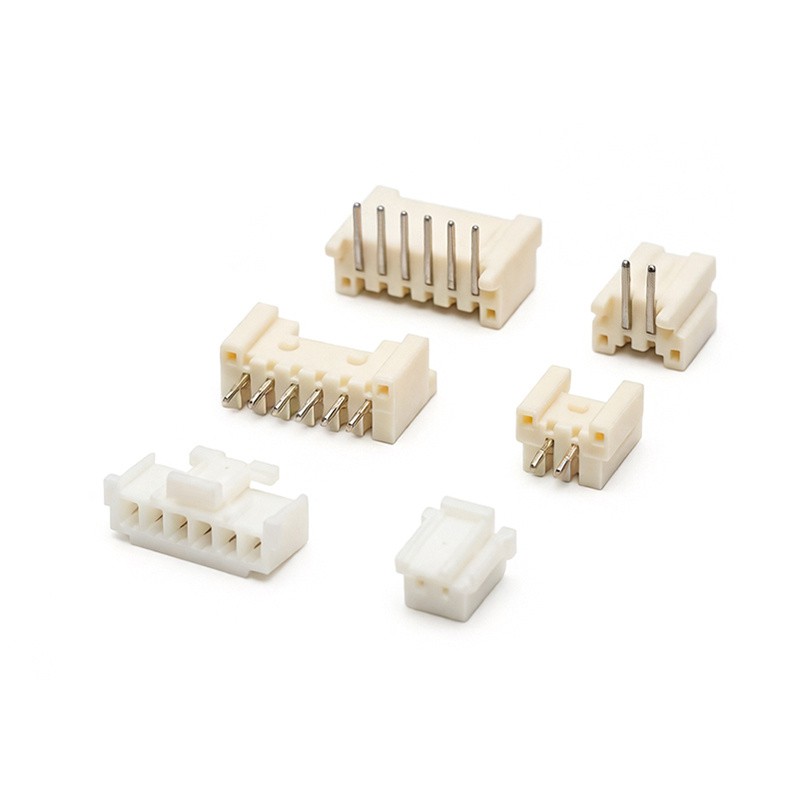
Whether you’re working on a small – scale DIY project or a large – scale industrial application, we’ve got the connectors for you. We offer a wide range of options in terms of pin size, pitch, current – carrying capacity, and housing materials.
Header Connector We’re always happy to have a chat with you about your needs. So, don’t hesitate to get in touch with our team. We’ll help you find the perfect connectors for your project and guide you through the whole purchasing process.
References
- "Electrical Connector Handbook" by Adam M. Thompson
- Industry publications on automotive, medical, and general electronics standards
Wenzhou JKUN Connector Co., Ltd.
As one of the most professional pin headerfemale header connector manufacturers and suppliers in China, we’re featured by quality products and low price. Please rest assured to wholesale bulk customized pin headerfemale header connector from our factory. For quotation and free sample, contact us now.
Address: No.2667, Ningkang East Road, Yueqing City, Zhejiang Province, China
E-mail: sales@cnjkun.com
WebSite: https://www.jkunjcj.com/
