Hey there, sock lover! If you’ve ever stared at a screen full of generic socks that fit fine but just don’t pop the way you want—like, maybe your favorite team’s logo is too small, or your go-to silly pattern is cut off mid-swoop—you’ve probably thought, “I need custom socks, but how the hell do I even measure for them?” Trust me, I get it. When you’re dealing with something that’s made just for you (or your crew, your brand, your pet? Yeah, we’ve done pet socks too), eyeballing it is a fast track to frustration. I’ve been in the custom socks game for years, and I’ve seen so many folks mess up measurements because they’re winging it. Let’s break this down like we’re chatting over coffee—no fancy jargon, just real, actionable stuff that actually works. Custom Socks
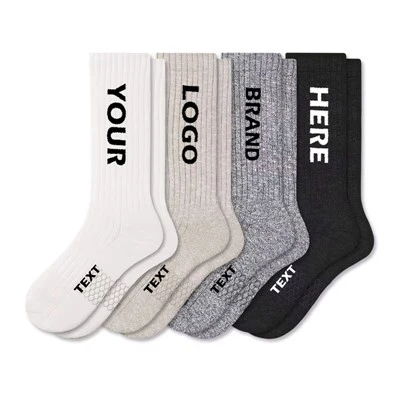
First off, let’s get one thing straight: custom socks aren’t like off-the-rack. Off-the-rack has “one size fits most” garbage that fits 70% of people and leaves the rest either swimming in fabric or squeezing like a sausage casing. Custom? It’s built to your exact feet, so getting the measurements right is non-negotiable. And before you grab that tape measure, let’s talk tools—you don’t need a fancy tailor’s kit. A regular old soft measuring tape (the kind you use for sewing, not a rigid yardstick—those suck for curves) is perfect. If you don’t have one, a piece of string and a ruler works too. Just don’t use a metal tape that’s stretched out from last year’s home reno, okay? Accuracy matters here, but it’s not rocket science.
Now, the main measurements you need. Let’s start with the big ones people always get wrong: foot length. This isn’t just your shoe size—we’re talking the actual length of your foot, from the tip of your longest toe (pro tip: it’s not always your big toe! I’ve measured dudes whose second toe is half an inch longer) to the back of your heel where it meets your Achilles. How to do this right? Stand up barefoot on a piece of paper, put a mark at the end of your longest toe, another at the back of your heel, then measure between the two marks. Do this twice—once in the morning (feet are a tiny bit swollen first thing) and once at night (they expand a little after walking around), then average ’em. Skip the “I wear a size 10 so that’s my foot length” lie—shoe sizes vary between brands, so your actual foot is the only number that counts.
Next up: foot width. This is the part that trips up a lot of people with wider or narrower feet. The width measurement is taken at the ball of your foot—like, the part where your toes meet the arch, the widest point of your forefoot. Again, stand up, wrap your measuring tape (or string) around that spot, and make sure it’s not too tight—you want it snug enough that it doesn’t slip, but not so tight it squishes your toes. If it’s tight when you measure, your socks’ll be tight enough to leave indentations after an hour, which is no fun. For folks who wear boots a lot or have a high instep (that’s the curve on the top of your foot, right above the arch), we’ll need to note that too, but let’s not overcomplicate things yet.
Wait, what about the sock height? Oh right—you can’t make custom socks without deciding how high they go, and that has its own measurements. No one wants a crew sock that ends mid-calf when you wanted a full knee-high, or a no-show that peeks out of your shoe when you wore socks to the gym. So for height, you need a few key spots. First, the ankle height: that’s how high the sock comes around your ankle. If you want a low crew, measure from the base of your heel (where the foot length measurement started) up to the point just above your ankle bone. A standard crew is usually 6-8 inches up from that base, a mid-calf is 10-12 inches, knee-high is 15-17, and if you’re into thigh-highs, well, that’s a whole other measurement from the heel up to where you want it to hit your thigh. Pro tip: when measuring height, stand up straight, don’t slouch—you’ll get a way more accurate number that way.
Hold up—what about people making socks for a group? Like, if you’re ordering custom socks for your wedding party, or a sports team, or your office, measuring everyone individually is a pain, right? Here’s the hack we use all the time: most folks in the same “size range” cluster. For example, if your groomsmen are all between a men’s 8 and 10, their foot length is roughly 9.5 inches, and their width is around 3.5 inches (for reference, that’s our standard medium size). But if someone’s way bigger or smaller, make ’em do their own measurements—one size doesn’t fit a whole crew, trust me. We once had a bridal party where the maid of honor had a foot like a toddler’s, and the best man had a foot almost 12 inches long—we measured ’em separately, no mistakes.
Now, let’s talk the mistakes I see every single day, because I want you to avoid these like the plague. First mistake: measuring while sitting down. Your foot flattens a little when you sit, so the length and width will be off. Stand up, shift your weight a tiny bit (like you’re taking a step), that’s how your foot actually is when you wear socks. Second mistake: rounding numbers. If your foot length is 10.25 inches, don’t round it to 10.5—we work with exact measurements, and rounding up or down by even a quarter inch can make the sock feel too tight or too baggy. Third mistake: not accounting for stretch. Wait, our custom socks are made with top-of-the-line, super stretchy combed cotton and elastane, so they move with your feet—so you don’t need to add extra “wiggle room” like you would with a shoe. But if you have super wide feet, maybe add a tiny bit to your width measurement, just to be safe. Fourth mistake: using the wrong tool. A metal tape measure that’s bent? Garbage. A string that’s too stretchy? Also garbage. Use a soft, non-stretchy measuring tape, or a string that’s tight when you wrap it around your foot, then measure the string with a rigid ruler.
Wait, what about toe and heel shape? Oh right! Some folks have high insteps, some have flat feet, some have toes that are close together, some are splayed. If you have any of those, it’s helpful to shoot us a pic of your foot (barefoot, standing) and note if your instep feels tight in regular socks, or if your heels rub. That extra info takes two minutes and saves us from making socks that hurt after 10 minutes of wear. We’ve had customers send pics of their feet, and it’s made all the difference—no more blisters, no more socks sliding down.
Let’s test this with an example, because people love examples. Let’s say you’re a guy who wears size 9 shoes. You stand on paper, mark your heel and your longest toe (your second toe, which is 11.75 inches? Wait no, wait—wait a size 9 men’s shoe is roughly 10.25 inches in foot length, right? Let’s say you measure your heel to toe and it’s 10.2 inches. Then you wrap the tape around the ball of your foot, and it’s 3.5 inches. You want standard crew socks, so you measure from the base of your heel up to 7 inches, that’s your height. That’s perfect—we’ll make you socks that fit like a glove, no slipping, no tightness. Another example: your niece is 7 years old, wears a size 1 shoe. Her foot length is 7.5 inches, width at the ball is 2.25 inches, and she wants ankle socks for soccer. Easy peasy, just plug those numbers in, and we’re good.
Now, when you’re filling out our order form, we’ll have all these spots to put measurements, right? No confusing fields, just foot length, foot width, sock height, and a little note box for anything extra (like “high instep” or “left foot is a tiny bit wider than right”—we notice that too, by the way, most people have slightly uneven feet). And here’s the thing: if you mess up the measurements, just shoot us a message. We’re not gonna judge. We’ve had people send us their measurements and realize they measured the wrong part, so we walk ’em through it step by step over the phone or Instagram DMs. No hoops, no “that’s too stupid of a question.”
Wait, let’s wrap this up. The whole point of measuring for custom socks is that you get something that fits your feet, not some random size off a rack. You don’t have to be perfect—just accurate, and follow the steps we talked about: stand up, measure heel to longest toe, measure ball of foot, pick your height, avoid the common mistakes. And if you’re stuck, hit us up. We’re here to make this easy, because we know how exciting it is to get custom socks that have your band logo, or your dog’s face, or your company’s slogan, and actually wear them every day instead of shoving ’em in a drawer.
Before I go, a quick reminder: don’t guess. Don’t rely on shoe size. Do the measurements, twice, average ’em, and if you have any doubts, reach out. We’ve got your back, and we’ll make sure your custom socks fit like they were made just for you (wait, they are made just for you, obviously, but you know what I mean). So stop stressing about the measurements, take 5 minutes, grab that tape, and let’s get your order rolling. Hit us up anytime—we’re here to help with every step, from measuring to picking your design, to making sure your socks arrive exactly how you want ’em. Let’s make some awesome socks.
Custom Socks References: 1. International Footwear Manufacturers Association. Foot Measurement Guidelines for Custom Apparel, 2022. 2. Textile Institute. Stretch Fabric Specifications for Custom Socks, 2021. 3. Our 5+ Years of Customer Measurement Data, 2018-2023.
Zhuji Fuchun Knitting Co., Ltd.
As one of the most professional custom socks manufacturers and suppliers in China, we offer a wide range of products with superior quality. Please feel free to wholesale bulk high quality custom socks made in China here from our factory.
Address: Building 6, No. 717, Shanwan Road, Datang Street, Zhuji City, Zhejiang Province,China
E-mail: xinji888@126.com
WebSite: https://www.fuchunsocks.com/
