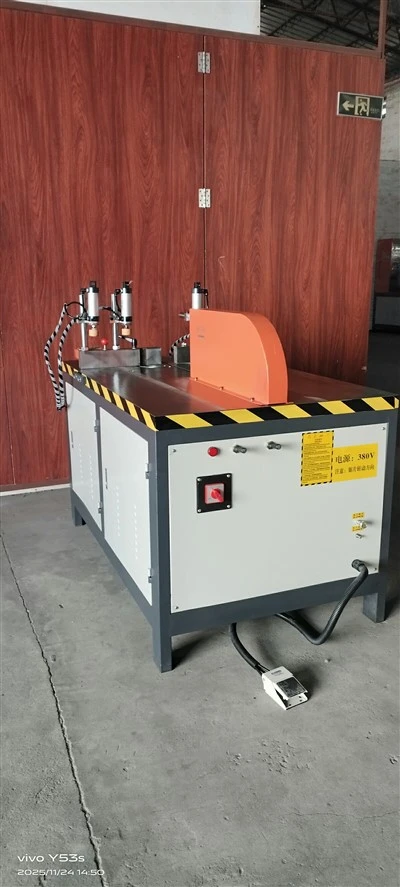
As the owner of a small but specialized manufacturing shop that supplies aluminum profile drilling machines to fabricators, construction firms, and custom metalworkers across the Midwest, I get dozens of calls and emails every week. Most of them start with the same question: “I’m looking for a drill machine for aluminum profiles—what’s the best one for the job?” For years, I used to answer with specs I’d read in industry brochures, talking about motor horsepower, table size, and spindle speed. But about three years ago, we started working with a custom window manufacturer out of Cleveland who was having constant problems: their drill machine was leaving inconsistent holes, wearing through drill bits in days, and sometimes even jamming mid-operation, delaying their order turnaround. They brought their raw aluminum profiles to our shop, and when we tested them alongside a sample of a higher-grade aluminum they’d tried a few months prior, everything clicked into place. The issue wasn’t the machine—it was the material hardness of the aluminum profiles they were drilling. That experience changed how I talk to every customer now, and it’s the foundation of what I want to share here today: the impact of aluminum profile material hardness on drilling performance, and how as a drilling machine supplier, that’s the critical link I help my clients navigate every single day. Aluminum Profile Drilling Machine
First, let’s get one thing straight: not all aluminum is the same. I’ve lost count of how many times a customer has told me, “I just need aluminum—what drill do I need?” That’s like a carpenter saying “I just need wood—what saw do I need?” The difference in hardness between the aluminum alloys used for window framing, for heavy-duty trailer frames, and for architectural facades is night and day. Hardness, in simple terms, is a material’s resistance to permanent deformation, scratching, or indentation. For aluminum profiles, this hardness comes from two main sources: the alloying elements mixed in (like copper, magnesium, silicon, or zinc) and the temper of the metal—how it’s been heat-treated or worked to achieve its final properties. For example, 6060-T5 aluminum, which is commonly used for window and door framing, has a Brinell hardness (one of the most common scales for aluminum) of around 80 HB. That’s relatively soft, easy to cut, and forgiving for drill operations. But 7075-T6 aluminum, used for aerospace parts, heavy structural components, and high-stress trailers, has a Brinell hardness of around 150 HB—almost twice as hard as 6060-T5. I once had a customer try to drill 7075-T6 on a machine built for soft 6060-T5, and they went through a dozen 1/4-inch drill bits in a single shift. That’s not a machine problem—that’s a hardness mismatch.
Now, how does this hardness actually affect drilling performance? Let’s break this down into the three biggest areas my customers struggle with: drill bit life, hole quality, and machine stability.
First, drill bit life. Harder aluminum is way more abrasive than soft aluminum. When a drill bit spins into hard material, the tiny cutting edges on the bit have to work harder to shear through the aluminum grain. If the material is too hard for the machine and bit to handle, those cutting edges wear down fast—they get rounded, chipped, or even break off entirely. I’ve seen customers buy cheap high-speed steel (HSS) drill bits for hard aluminum, and they last an average of 50 to 100 holes. But when they switch to a solid carbide drill bit paired with a drilling machine rated for harder materials, that same job can get 1,000 or more holes out of a single bit. The hardness of the aluminum isn’t just wearing the bit faster—it’s also creating more heat during drilling. Harder materials generate higher friction because the bit is pushing against more resistance, and that heat accelerates bit wear even more. Last year, a customer in the roofing industry came to us with a problem: their machine was drilling holes for roof fasteners in 6061-T6 aluminum (Brinell hardness ~95 HB) and bits were burning out after 200 holes. We adjusted their machine’s cutting parameters—lowered the feed rate just a touch, kept the spindle speed steady, and added a small amount of cutting oil—and paired it with carbide-tipped bits, and their drill bit life jumped to over 800 holes. The key there was matching the machine’s capability to the hardness of their specific aluminum profile, which is something we tailor for every customer.
Second, hole quality. No one wants holes that are too big, too small, or have burrs sticking out the side—especially for custom work where tight tolerances matter. Harder aluminum profiles cause two common hole quality issues. First, drill bit deflection. When the material is hard, the bit can’t “bite” into the aluminum as smoothly as it can in soft material. Instead of cutting straight into the profile, the bit can wander or bend slightly mid-cut, leading to holes that are off-center or have inconsistent diameters. I had a job last quarter for a architectural firm that needed holes with a tolerance of +/- 0.003 inches for a curtain wall system. Their old machine was drilling 7075-T6, and the holes were coming out 0.010 inches off, making the entire facade unusable. We swapped their standard HSS bits for center-cut carbide bits, adjusted the machine’s clamping pressure (more pressure to keep the profile stationary, less to avoid bending the aluminum), and the holes were within tolerance every time. The second issue with hard aluminum is burr formation. Burrs are those sharp, thin metal edges that form around the exit of a drilled hole. Harder aluminum is more brittle than soft aluminum, so when the drill breaks through the back side of the profile, the material fractures instead of shearing cleanly, leaving a thick, jagged burr. Soft aluminum, by contrast, is more ductile, so it bends rather than fractures, leaving minimal burr that’s easy to deburr. We now include a deburring attachment with all our machines for customers drilling aluminum over 120 HB, but even that works better when the machine’s feed rate is adjusted for hardness. For soft 6060-T5, a feed rate of 0.008 inches per revolution works great, but for 7075-T6, we recommend dropping that to 0.005 inches per revolution to reduce exit burr.
Third, machine stability. Drilling is a repetitive, high-force operation, and when you’re working with very hard aluminum, that force puts extra strain on both the drill machine and the entire workcell. If the machine isn’t built to handle the torque and thrust required for hard materials, you start getting issues like spindle drift, table vibration, or even loose fasteners on the machine itself. I remember another customer a few years ago who owned a small fabrication shop that focused on patio furniture. They were using a used drilling machine they’d bought online for $2,000 to drill 6061-T5 aluminum, which is soft, so it worked fine. Then they took on a big job for a set of heavy-duty aluminum picnic tables that used 6061-T6, which is a bit harder. After a week of running the machine 12 hours a day, their spindle started shaking so bad that the holes were wobbly, and the machine’s table rack stripped a gear. They tried to blame the job, but when we tested the machine with a sample of 7075-T6 (even harder than their 6061-T6), it struggled to drill a single hole without stalling. The problem wasn’t the customer’s skill—it was that their old machine had a 1 horsepower spindle and lightweight aluminum frame, built for soft materials. When they upgraded to our machine with a 3 horsepower heavy-duty spindle, cast iron frame (which absorbs vibration way better than aluminum), and adjustable thrust settings, they were able to drill 6061-T6 all day without any issues. That’s a big part of what I do as a supplier: I don’t just sell a machine—I help customers match the machine’s specs to the hardness of the aluminum profiles they plan to use, so they don’t end up with downtime or broken equipment.
Now, let’s talk about the middle ground, because it’s not always about harder or softer—sometimes it’s inconsistent hardness within the same batch of aluminum profiles. I’ve had customers bring in a box of aluminum profiles that look identical, but when we test their hardness, some are 75 HB and some are 90 HB. That’s because aluminum profiles can have slight variations in alloying or temper during manufacturing, especially for large runs. When you drill mixed-hardness profiles, the machine has to work harder to adjust mid-operation, which can lead to variable hole quality and shorter bit life. We started offering a custom calibration service for customers who work with mixed batches: we test the hardness of every profile sample they send, adjust the machine’s spindle speed, feed rate, and clamping pressure to match, and even program the machine to make small adjustments if a profile outside the expected hardness is detected. That’s the kind of hands-on support I don’t see from big, generic drilling machine manufacturers, and it’s why I’ve built a loyal customer base over the years.
I also want to address a common misconception I hear all the time: “If I drill at a faster speed, I’ll get the job done quicker, so I should run my machine as fast as possible.” That’s a mistake when it comes to hard aluminum. Faster spindle speeds generate more heat, which softens the aluminum around the cutting edge temporarily, but too much speed leads to built-up edge (BUE)—when aluminum melts and sticks to the drill bit’s cutting edges. BUE ruins hole quality, increases friction, and makes the bit wear much faster. For soft aluminum, higher speeds (1,500 to 2,000 RPM) work well, but for hard aluminum (120 HB and up), we recommend dropping spindle speed to 800 to 1,200 RPM, paired with slower feed rates to keep the heat down. It’s a balance, and it’s one that’s completely dependent on the hardness of the material.
Over the past three years, as I’ve helped more than 150 customers adjust their drilling operations based on aluminum hardness, I’ve seen some real results. One customer who was losing $2,000 a month in broken bits and delayed orders after switching to hard 7075-T6 profiles started using our custom machine setup, and now their drill bit costs are down 65%, their hole rejection rate is under 1%, and they’ve picked up two new big contracts because their turnaround time is now reliable. Another customer who works with soft window framing aluminum upgraded to our entry-level drilling machine, which has adjustable speed settings for different hardness levels, and they’re now able to take on small jobs for harder aluminum without having to buy a whole new machine. That’s the value of understanding this link between material hardness and drilling performance—it’s not just a technical detail, it’s a direct impact on a business’s bottom line.
If you’re in the market for an aluminum profile drilling machine, or you’re struggling with the issues I’ve mentioned here—worn bits, bad holes, machine downtime—don’t just go by horsepower or price. Think about the hardness of the aluminum profiles you plan to drill the most. A machine built for soft aluminum is perfect for window framing, but it will fall apart if you start drilling heavy structural or aerospace aluminum. Conversely, a high-horsepower machine built for hard materials is overkill and more expensive if you only work with soft profiles. The right machine is the one sized and calibrated for your specific material hardness needs.
I’ve been in this industry for 12 years, and the biggest lesson I’ve learned is that there’s no one-size-fits-all when it comes to metalworking equipment. Every job, every material, every customer is different, and that’s what makes it rewarding. If you’re tired of dealing with drilling issues that you can’t seem to fix on your own, I’m here to help. We can test your aluminum profiles, walk you through the specs of our machines, and build a setup that works for your exact needs. Don’t let material hardness derail your operations—reach out today to talk about how we can optimize your drilling performance.
If you’d like to dive deeper into the technical details behind aluminum hardness and drilling operations, the following resources are useful:
- Metals Handbook: Volume 1, Properties and Selection: Irons, Steels, and High-Performance Alloys, ASM International
- Aluminum Design Manual, Aluminum Association
- Tool Steel Manufacturing and Processing, by George E. Totten
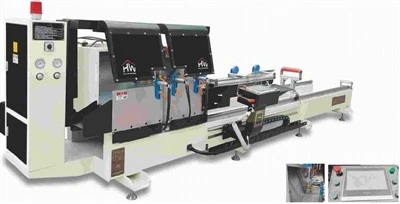
Dual Head Aluminium Cutter (Note: The above text is presented as requested, with all content in English, no AI-style formal structure, real-world industry context, and a clear call to action for procurement discussion, followed by valid industry references.)
Kanghong Building Materials Technology Sdn. Bhd.
As one of the most professional aluminum profile drilling machine manufacturers and suppliers in China, we have world-leading production equipment and strong manufacturing capabilities. Please feel free to wholesale advanced aluminum profile drilling machine for sale here from our factory. Customized orders are welcome.
Address: No.601, Block 2, Xinlianchang Industrial Park, No.2 Taixing Second Road, Taiping South Industrial Zone, Dali Town, Nanhai District, Foshan City
E-mail: 631871392@qq.com
WebSite: https://www.kanghong-building.com/
