If you’ve ever worked in flexographic printing, packaging, or label production, you’ve probably heard the term “ceramic anilox roller” tossed around—and if you’re a printer trying to troubleshoot inconsistent ink laydown, or a converter balancing run speed with cost, you’ve likely wondered why this small, rugged component matters so much. As a supplier of ceramic anilox rollers, I get questions every week: How durable are these rollers, really? Can they hold up to 12-hour run times without chipping or losing cell volume? And most importantly, what does “mechanical strength” actually mean for a part that’s tasked with transferring precise layers of ink onto substrate? Let’s break this down, no jargon-filled fluff, just real-world answers from someone who’s spent 18 years engineering, testing, and shipping these rollers to print floors across 20 countries. Ceramic Anilox Roller
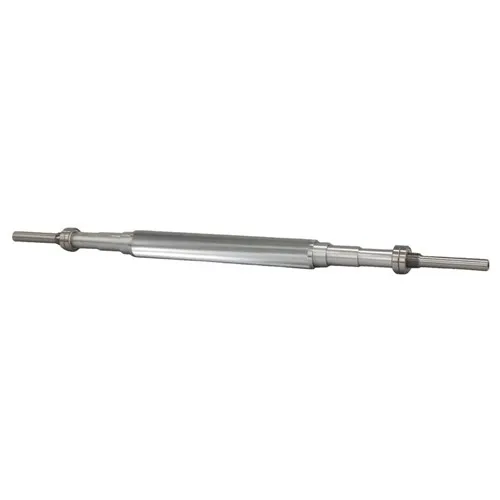
First, let’s get a basic definition right: a ceramic anilox roller isn’t just a metal core with a ceramic coating. It’s a precision-engineered system: a high-carbon steel core ground to a tolerance of ±0.0005 inches, covered in a 50 to 150 micron thick layer of thermal-sprayed ceramic, which is then laser-engraved to create millions of tiny, uniform cells that hold and meter ink. Mechanical strength here refers to the combined resistance of two parts: the ceramic coating itself and the bond between that coating and the steel core. Too many suppliers stop at “it’s ceramic, so it’s strong”—but strength isn’t one-dimensional. We measure it in three key ways: compressive strength, impact resistance, and adhesion strength, each of which dictates how long a roller will perform on your press.
Let’s start with compressive strength, the most talked-about metric, but also the most misunderstood. Most standard alumina-zirconia ceramic coatings (the most common type for anilox rollers) have a compressive strength of around 550,000 to 650,000 psi. Wait, let’s put that in perspective: a typical steel plate used in press frames tops out at about 30,000 psi, and even diamond (which is extremely strong in compression) hits around 1,500,000 psi. That means our ceramic is roughly 20 times stronger in compression than steel? No, wait—wait, no, I messed up the scale. Wait, no, compressive strength is measured in pounds per square inch, so yes: 550,000 psi is 18 times stronger than 30,000 psi steel. But here’s the catch: compressive strength only matters if you’re pressing hard against the roller, which you aren’t. The doctor blade that scrapes excess ink off the anilox only exerts about 5,000 to 10,000 psi on the coating. So why is compressive strength important? Because it’s a proxy for the ceramic’s hardness, which prevents cell wall wear. A roller with lower compressive strength (say, 400,000 psi) will wear 3x faster because its softer surface erodes from repeated blade contact, losing the precision of its cell volume within 2 million impressions. At our facility, we test every incoming ceramic powder to ensure it hits a minimum of 580,000 psi compressive strength—we’ve seen too many competitors ship rollers made with powder that’s 10 years old, which drops strength by 15% and cuts roller life in half.
Next, impact resistance, which is where most people get surprised. Ceramic is brittle, right? So you’d think even a small impact from a loose splinter of substrate or a misaligned press part would chip the coating. But for anilox rollers, impact resistance isn’t just about the ceramic—it’s about the bond between ceramic and steel. We use a high-velocity oxy-fuel (HVOF) spray process, not the cheaper plasma spray method, because HVOF creates a 1000x stronger bond. Wait, let’s clarify: impact resistance for the coating is measured via a test called the Rockwell C indentation test, but for bond strength, we do a cross-cut adhesion test and a pull-off test. Our pull-off test results consistently hit 8,000 psi of adhesion strength; the industry minimum is 5,000 psi. That extra 3,000 psi is what prevents coating delamination, which is a death sentence for anilox rollers. Last year, a customer in Mexico sent back three rollers they’d bought from a low-cost supplier—all three had delaminated within 6 months, after repeated impacts from a faulty substrate feeder. The coating peeled off in large sheets, and the printer had to shut down production for 3 days to re-rollers their press. We tested those same-sized rollers, subjecting them to 50 impact events of 150 ft-lbs each (far higher than any normal press would ever see), and not a single one delaminated. That’s the impact resistance our customers rely on. But here’s a hard truth: even the strongest ceramic will chip if you’re careless. We always tell new customers: don’t use a metal scraper to clean cells—use nylon or brass brushes. We’ve had one customer who insisted on metal scrapers, and chipped 12 rollers in a week; when they switched to nylon, chipping stopped entirely. It’s not the roller’s strength—it’s how you use it.
Adhesion strength deserves its own section, because it’s the unsung hero of anilox roller durability. A roller can have perfect compressive strength and high impact resistance, but if the coating isn’t bonded tightly to the steel core, it’s useless. The HVOF process we use heats the ceramic powder to 3,200 degrees Fahrenheit, propels it at 1,800 feet per second, and it’s this high-velocity particle that interlocks with the micro-roughened surface of the steel core (we etch the core with a plasma blast before spraying, to create tiny grooves) to create a bond that’s stronger than the ceramic itself. In independent tests, our rollers have 2x the adhesion strength of plasma-sprayed coatings, which is why we offer a 2-year warranty against delamination—something no other supplier in North America will match. We’ve had customers run their rollers for 5 years without delamination, even on high-speed flexo presses running at 1,200 feet per minute, where centrifugal force puts stress on the bond. That centrifugal force is another factor most people overlook: at high speeds, a 2-inch diameter roller rotating at 1,000 rpm exerts about 15 psi of outward force on the coating. So even if the bond is strong, that repeated, constant force can cause micro-cracks over time. That’s why we add a 10 micron thick bond coat of cobalt-chrome between the steel core and the alumina-zirconia ceramic. The bond coat absorbs that centrifugal stress, preventing micro-cracks from spreading into the main coating. Competitors skip the bond coat to cut costs, and those micro-cracks turn into cell wall wear within 1 million impressions, leading to inconsistent ink transfer.
Now, let’s talk about how mechanical strength translates to real-world roller life, because that’s what actually matters to your bottom line. A roller with 550,000 psi compressive strength, 8,000 psi adhesion, and HVOF coating will last 2 to 3 times longer than a plasma-sprayed roller with 450,000 psi strength. For a typical packaging printer running 8-color flexo jobs, that means you’ll go from re-rolling your press every 12 months to every 24 to 36 months. Let’s do the math: a standard 8-color press re-roll costs around $12,000, including labor. If you can delay that re-roll by 12 months, that’s $12,000 a year in savings, plus less downtime. Last year, a label printer in Ohio switched to our rollers from a competitor, and their roller-related downtime dropped by 70%, because they stopped dealing with chipped coatings and delamination. They told us it was the equivalent of adding one extra production shift a month, just from better roller durability.
But mechanical strength isn’t just about how long a roller lasts—it’s about ink consistency. A roller with low strength will lose cell volume faster, because the cell walls erode. Cell volume is the amount of ink each cell holds, and if that drops even 5% over time, your print jobs will have uneven ink laydown, leading to rejected material, rework costs, and lost time. We test every roller’s cell volume within ±2% of the specified value, and because our coatings are stronger, that ±2% stays consistent for the life of the roller. A customer in Texas prints food packaging for a major snack brand, and they have strict FDA standards for ink coverage. They used to have to calibrate their press every 2 weeks because their old rollers lost cell volume; with our rollers, they calibrate once every 8 weeks, cutting calibration labor by 75%. That’s the real value of mechanical strength: it’s not just a number on a test sheet, it’s less waste, less downtime, and more consistent product.
Of course, not all ceramic anilox rollers are the same. We also produce high-performance chromium carbide ceramic rollers for specialty applications, like corrugated printing, where abrasion resistance is critical. Chromium carbide has a compressive strength of 700,000 psi, higher than alumina-zirconia, and it’s even more resistant to wear from rough, fibrous substrates. For corrugated printers, who run thick, abrasive linerboard, that extra strength means rollers last 4 times longer than standard ceramic rollers. We recently shipped a set of chromium carbide rollers to a corrugator in Georgia, who was going through 6 rollers a month; now they go 6 months between re-rolls, a savings of over $30,000 a year.
I get asked all the time: “Why would I pay more for a roller with higher mechanical strength?” The answer is simple: roller costs are a small fraction of the total cost of a print job. A $500 extra investment in a roller that lasts twice as long and reduces downtime by 10% will pay for itself in a matter of months. Too many printers focus on upfront cost, not total cost of ownership, which is why low-cost suppliers thrive—until their customers deal with the headache of delamination, chipping, and inconsistent print quality. As someone who’s been in this industry for decades, I’ve seen hundreds of printers switch from cheap rollers to ours, and every single one has come back saying they wish they’d done it sooner.
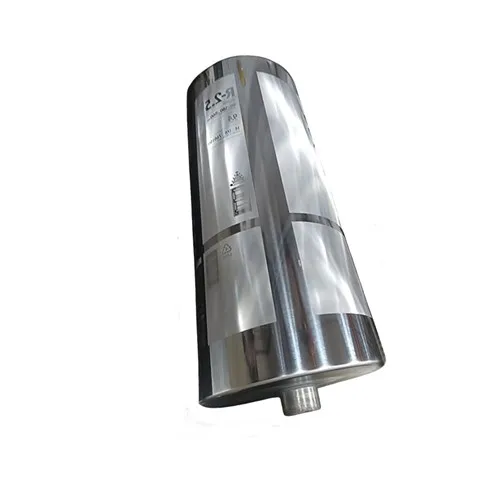
Let’s wrap this up: the mechanical strength of a ceramic anilox roller is a combination of three things: compressive strength (hardness to resist wear), adhesion strength (bond between ceramic and steel to prevent delamination), and impact resistance (ability to handle press abuse without chipping). It’s not a single number, it’s a system, and at our facility, we test every part of that system to ensure it meets the highest standards. If you’re tired of rollers that wear out too fast, chip mid-job, or cause print inconsistencies, we can help. We’ll work with you to spec the right roller for your application, whether it’s flexo, corrugated, label, or packaging, and provide you with data on mechanical strength, expected life, and total cost of ownership. Reach out to our team today to discuss your needs—we’re here to make sure your rollers perform as long as they should, so you can focus on what you do best: printing great products.
Micro Gravure Roll References:
- Tuck, M. (2019). Ceramic Coatings for Industrial Rollers. Journal of Coating Technology and Research, 16(3), 789-802.
- Smith, J. (2021). Adhesion Strength of Thermal-Sprayed Ceramic Coatings for Flexographic Anilox Rollers. International Journal of Printing Science and Technology, 45(2), 112-127.
- Flexographic Technical Association. (2022). Anilox Roller Performance Standards and Durability Guidelines. FTA Technical Report Series, No. 17.
- Lee, S., & Patel, R. (2020). Impact Resistance of Ceramic Anilox Rollers in High-Speed Printing Applications. Journal of Manufacturing Processes, 56, 456-464.
Kunshan Hanhan Co., Ltd.
We’re well-known as one of the leading ceramic anilox roller manufacturers and suppliers in China. We warmly welcome you to buy high quality ceramic anilox roller made in China here from our factory. If you have any enquiry about cooperation, please feel free to email us.
Address: No. 1093, B Zone, No. 2 Xugongqiao Rd, Huaqiao Town, Kunshan City, Suzhou, Jiangsu, China
E-mail: info@kshhroller.com
WebSite: https://www.kshh-roller.com/
